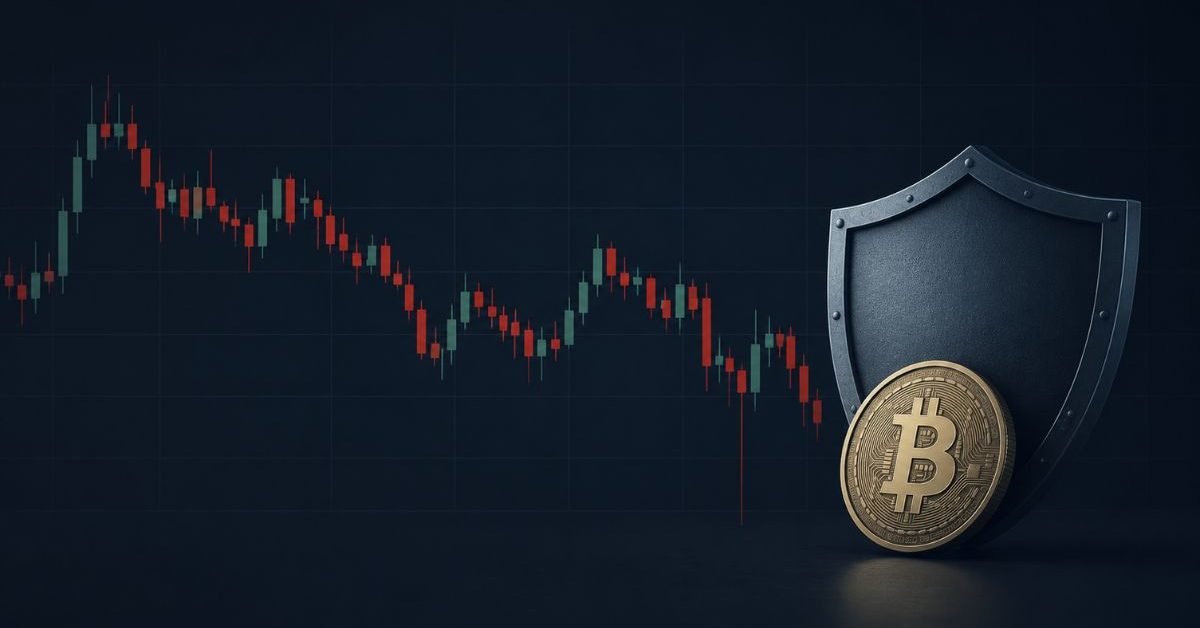
Following recent announcements from the Federal Reserve, prominent analysts at Marex have characterized the crypto market’s current positioning as ‘defensive and thin’ as defensive crypto market This assessment reflects a prevailing caution among investors and a noticeable reduction in market liquidity, painting a picture of an ecosystem bracing for continued macroeconomic uncertainty. Understanding this shift is crucial for anyone involved in digital assets, from institutional traders to long-term holders.
The Federal Reserve’s monetary policy decisions, particularly those concerning interest rates and quantitative tightening, exert significant influence across all risk assets, including cryptocurrencies. When central banks adopt a hawkish stance, it typically prompts investors to de-risk portfolios, moving capital from volatile assets into safer havens. This macro trend directly impacts the valuation and trading dynamics within the crypto space.
The Fed’s Influence on Digital Asset Markets
Monetary Policy and Risk Assets
The relationship between traditional financial markets and the digital asset space has strengthened considerably. As the Fed signals a commitment to controlling inflation, often through higher interest rates, the cost of capital increases. This scenario makes speculative assets, like many cryptocurrencies, less attractive compared to fixed-income investments or even stable fiat currencies.
A hawkish Fed creates an environment where investors prioritize capital preservation over aggressive growth. This shift in sentiment is a primary driver behind the current defensive crypto market posture. For a deeper dive into how such policies impact markets, one might explore historical instances of central bank interventions, such as those discussed in ‘Hawkish Warsh Fed: Market Impact & Business Strategy‘.
The Correlation Shift
Historically, cryptocurrencies sometimes moved independently of traditional markets. However, in recent cycles, Bitcoin and the broader defensive crypto market crypto market have shown increasing correlation with tech stocks and other growth assets. This means that when the equity market experiences a downturn due to Fed policies, crypto often follows suit, magnifying the ‘risk-off’ sentiment.
This evolving correlation underscores the increasing maturity and integration of digital assets into the global financial landscape. It also highlights why macro-economic indicators and central bank policies are now critical factors for crypto market analysis, rather than just internal ecosystem developments.
What ‘Defensive and Thin’ as Defensive Crypto Market Positioning Means
Reduced Liquidity and Volatility
When analysts describe a market as ‘thin,’ it primarily refers to a lack of liquidity. This implies fewer active buyers and sellers, leading to wider bid-ask spreads and potentially more volatile price movements with smaller trade volumes. In a thin market, large orders can have a disproportionate impact on prices, making it challenging for institutions to enter or exit positions without causing significant market shifts.
A defensive posture, coupled with reduced liquidity, means that capital is not readily flowing into the market. Instead, investors might be holding stablecoins or fiat, waiting for clearer signals, or even withdrawing funds. This can lead to a ‘knife-edge’ market where prices are highly susceptible to sudden shifts based on news or minor trading activity.
Investor Sentiment and Capital Flight
The ‘defensive’ aspect points to prevailing investor sentiment. Fear of further rate hikes, recession concerns, or regulatory crackdowns can cause a significant exodus of capital. This ‘capital flight’ often manifests as outflows from crypto investment products, as reported by various market data providers.
Such outflows contribute directly to the market’s thinness, creating a feedback loop where reduced liquidity further dampens sentiment. Navigating this environment requires a disciplined approach, focusing on risk management and understanding the broader macroeconomic context. Recent trends in crypto investment product outflows further illustrate this sentiment, with some periods seeing significant withdrawals, as detailed by TechSpot.
Technology Fundamentals Amidst Market Caution
Blockchain Innovation Continues
Despite the cautious market sentiment and defensive crypto market positioning, the underlying technological innovation within the blockchain space continues unabated. Developers are still building, improving scalability solutions, enhancing security protocols, and exploring new applications for decentralized technology. This foundational work is crucial for the long-term viability and growth of the ecosystem.
Periods of market consolidation often serve as incubators for significant technological advancements, weeding out less robust projects and allowing well-funded, innovative initiatives to mature. Focus shifts from speculative trading to fundamental value creation.
Real-World Asset Tokenization
One area seeing continued development is the tokenization of real-world assets (RWAs). This involves representing tangible or intangible assets on a blockchain, offering increased liquidity, fractional ownership, and transparent record-keeping. Even in a defensive market, the inherent efficiency and accessibility benefits of RWA tokenization maintain its appeal for institutional adoption and long-term investment horizons.
Projects focused on integrating blockchain with supply chains, intellectual property, or traditional financial instruments demonstrate resilience. For example, enterprise adoption of blockchain for various business processes continues to grow, transforming sectors from logistics to finance, as highlighted by CIO.
Regulatory Scrutiny and Market Resilience
Global Regulatory Landscape
Regulatory developments play an increasingly vital role in shaping the crypto market. Governments worldwide are grappling with how to regulate digital assets, ranging from consumer protection to anti-money laundering (AML) measures. Clarity in regulation could potentially alleviate some of the current market uncertainty, fostering greater institutional participation and broader adoption.
Conversely, inconsistent or overly restrictive regulations can exacerbate defensive market sentiment and drive innovation to more favorable jurisdictions. The push for regulatory frameworks is a double-edged sword, offering both potential stability and potential headwinds.
Impact on Decentralized Finance (DeFi)
The decentralized finance (DeFi) sector is particularly sensitive to regulatory shifts. Its permissionless and open nature often clashes with traditional financial oversight models. While DeFi promises greater financial inclusion and innovation, regulatory efforts aim to mitigate risks associated with smart contract vulnerabilities, market manipulation, and consumer protection.
In a defensive market, DeFi protocols with strong security audits, transparent governance, and clear risk mitigation strategies are likely to fare better. Users prioritize safety and reliability over speculative yield farming in uncertain times.
Navigating a Cautious Crypto Landscape
Strategies for Institutions and Retail
For institutions, a defensive market often means recalibrating risk models, focusing on due diligence, and potentially increasing exposure to less volatile assets like Bitcoin or Ethereum. Diversification within the crypto space, alongside traditional assets, becomes even more critical. Risk-averse strategies, such as dollar-cost averaging, can help retail investors mitigate volatility.
Understanding market cycles and identifying projects with strong fundamentals and real-world utility are paramount. This period can be an opportunity for investors with long-term conviction to accumulate assets at potentially lower valuations.
Long-Term Outlook
While the immediate outlook points to a cautious and defensive crypto market, the long-term potential of blockchain technology and digital assets remains strong. The underlying trends of decentralization, financial inclusion, and technological innovation are powerful forces that transcend short-term market fluctuations.
As the market matures and regulatory clarity emerges, periods of defensive positioning can be seen as necessary cycles that prune excesses and lay the groundwork for sustainable growth. Patience and a focus on fundamental value will likely reward those who navigate these conditions effectively.
Conclusion
Marex analysts’ assessment of a ‘defensive and thin’ crypto market positioning after the Fed’s actions accurately captures the current sentiment and operational reality. This environment, characterized by reduced liquidity and cautious investor behavior, underscores the increasing interconnectedness between traditional macroeconomics and the digital asset space. While challenging, these periods also highlight the resilience of foundational blockchain technology and the ongoing innovation that promises long-term value creation. Smart navigation through these conditions, focusing on fundamentals and risk management, will be key for participants in the evolving crypto ecosystem.
Frequently Asked Questions
What does ‘defensive and thin’ mean in crypto market positioning?
‘Defensive’ refers to investor caution, where capital shifts towards safer assets due to macroeconomic uncertainties. ‘Thin’ indicates reduced liquidity, meaning fewer active buyers and sellers, leading to wider bid-ask spreads and potentially higher volatility from smaller trades.
How do Federal Reserve actions impact the crypto market?
The Federal Reserve’s monetary policies, particularly interest rate adjustments and quantitative easing/tightening, influence the cost of capital and overall risk appetite. Hawkish stances typically lead investors to de-risk, moving away from speculative assets like crypto, causing price pressure and reduced liquidity.
Should investors avoid the crypto market during a ‘defensive’ period?
A ‘defensive’ period doesn’t necessarily mean avoidance but rather calls for heightened caution and strategic adjustments. Many investors view these times as opportunities to accumulate strong fundamental assets at lower prices through strategies like dollar-cost averaging, emphasizing long-term conviction over short-term speculation.
What role do technology fundamentals play in a cautious market?
In a cautious market, the focus often shifts from speculative hype to underlying technology and real-world utility. Projects with strong development teams, viable use cases (like RWA tokenization), and robust security protocols tend to exhibit greater resilience, as their long-term value proposition is more apparent.
How does regulatory development affect market sentiment in a defensive period?
Regulatory developments can either alleviate or exacerbate defensive sentiment. Clear, fair regulations can instill confidence and attract institutional capital, while uncertain or overly restrictive frameworks can deter investment and increase perceived risk, contributing to market thinness and investor apprehension.