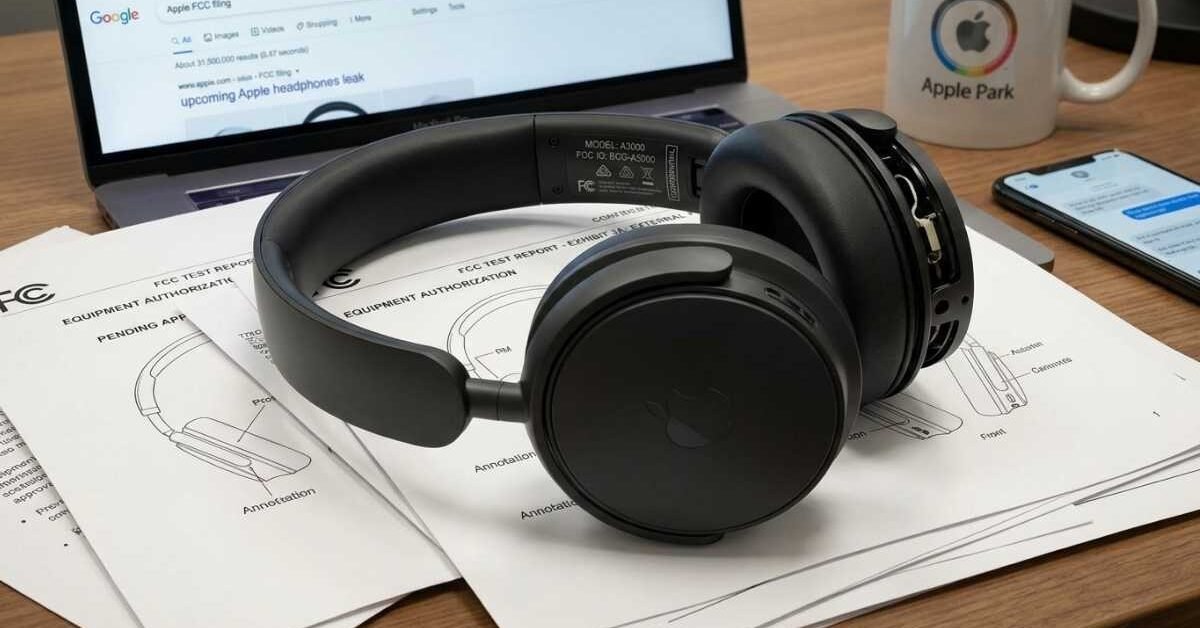
In a thrilling development for tech enthusiasts and a likely headache for Apple’s notoriously secretive product teams, unannounced headphones from the Cupertino giant have made an unexpected appearance in the public domain via documents filed with the Federal Communications Commission (FCC). This isn’t just another rumor; FCC filings are concrete evidence that a device is real, nearing production, and ready for regulatory approval before hitting shelves like Apple FCC Headphones Leak. For Apple, a company that guards its future products with an almost mythical zeal, such a leak is a rare glimpse behind the curtain, sparking immediate speculation about the nature, features, and release timeline of this mysterious new audio device.
The FCC’s Unintentional Role in Tech Journalism
The FCC, or Federal Communications Commission, is an independent agency of the United States government that regulates interstate and international communications by radio, television, wire, satellite, and cable. For any electronic device that utilizes wireless communication – be it Bluetooth, Wi-Fi, or cellular – a mandatory certification process with the FCC is required before it can be legally sold in the U.S. This process involves submitting detailed technical specifications, test reports, and often, internal and external photos of the device. While companies can request short-term confidentiality for certain aspects like external photos and user manuals to prevent leaks before launch, these confidentiality agreements eventually expire, making the information public.
The FCC’s database has, over the years, become an invaluable, albeit accidental, source for tech journalists and industry watchers. Major Apple products, from the original AirPods to the HomePod and even new iPhone iterations, have seen their initial details surface through these regulatory filings. The pattern is clear: once a device appears in the FCC database, its official launch is usually weeks, or at most a few months, away. This latest revelation involving Apple headphones signals an impending announcement that could significantly impact the wireless audio market.
Decoding the Documents: Glimpses of the Unknown
While the initial FCC filings often contain redacted information to preserve secrecy, they invariably reveal crucial tidbits. Typically, these documents confirm the device’s existence, its model number (which can sometimes be cross-referenced with previous leaks or inventory databases), its Bluetooth capabilities, battery specifications, and basic operational frequencies. For these unannounced Apple headphones, initial reports suggest standard Bluetooth connectivity, likely a key component for integration into the Apple ecosystem.
- Model Numbers: Often, multiple model numbers appear, indicating different versions (e.g., left/right earbud, variations for different regions, or even minor hardware revisions).
- Battery Capacity: While not always precise in the early stages, battery data can hint at the expected usage time and overall size.
- Connectivity: Confirmation of Bluetooth versions (e.g., Bluetooth 5.3 or newer) and Wi-Fi capabilities (if any) are standard.
- Form Factor Hints: Internal photos, even if obscured, can give clues about whether they are over-ear, on-ear, or a new earbud design. Speculation leans towards a new over-ear model or a radically redesigned AirPods Pro variant, distinct from the existing AirPods Max.
The absence of explicit branding in early filings is typical, but the internal component identifiers and the applicant’s name (Apple Inc.) leave no doubt as to the origin. This systematic, public disclosure through the FCC is a cornerstone of regulatory compliance, ensuring devices meet safety and electromagnetic compatibility standards, and incidentally, providing juicy fodder for the global tech news cycle.
Apple’s Dominance in the Audio Landscape
Apple has cemented its position as a powerhouse in the personal audio market, largely thanks to the phenomenal success of its AirPods lineup. Launched in late 2016, AirPods revolutionized the true wireless earbud category, setting industry standards for seamless connectivity, intuitive controls, and tight ecosystem integration. According to Counterpoint Research, Apple’s AirPods series consistently captures a significant share of the global true wireless stereo (TWS) market, often hovering around 25-30% of unit sales and an even higher percentage of market revenue due to their premium pricing.
The company’s audio strategy spans across several product lines:
- AirPods: The ubiquitous entry-level true wireless earbuds.
- AirPods Pro: Featuring Active Noise Cancellation (ANC), Transparency mode, and Spatial Audio for an immersive experience.
- AirPods Max: Apple’s premium over-ear headphones, known for their high-fidelity audio, robust ANC, and luxurious design.
- Beats by Dr. Dre: Acquired by Apple in 2014, Beats offers a range of headphones and earbuds catering to a different aesthetic and sound profile, still leveraging Apple’s H-series chips for enhanced connectivity.
The success of these products is not just about sound quality; it’s deeply intertwined with the Apple ecosystem. Features like automatic device switching, ‘Find My’ integration, and seamless pairing with iPhones, iPads, Macs, and Apple Watches create a sticky user experience that competitors struggle to replicate. This new FCC-revealed device will undoubtedly leverage these same ecosystem advantages, aiming to further solidify Apple’s hold on the premium audio market.
Speculating on Features: What Could Be Next?
Given Apple’s relentless pursuit of innovation, especially in its Pro and Max product lines, the unannounced headphones are highly anticipated to introduce cutting-edge features. Here are some informed predictions:
Next-Generation H-Series Chip
The AirPods Pro 2 feature the H2 chip, delivering superior audio quality, enhanced ANC, and improved battery life. It’s highly probable that these new headphones will debut an even more advanced H-series chip, perhaps an H3. This could enable:
- Even more powerful Active Noise Cancellation: Pushing the boundaries of silence in noisy environments.
- Adaptive Audio: A feature already seen in some AirPods Pro updates, but potentially refined further, intelligently blending ANC and Transparency based on ambient sound.
- Improved Spatial Audio with Dynamic Head Tracking: A more immersive and personalized audio experience, possibly with greater precision and a wider soundstage.
- Lower Latency: Crucial for gaming and video consumption.
Advanced Sensors and Health Integration
Apple has been steadily integrating health features across its product lines, from the Apple Watch’s ECG to AirPods’ health and fitness tracking capabilities. It’s not a stretch to imagine these new headphones could incorporate:
- Health Sensors: Rumors have long circulated about AirPods potentially gaining capabilities like body temperature sensing, heart rate monitoring, or even hearing health assessments (e.g., checking hearing ability over time, guiding safe listening levels).
- Enhanced Fitness Tracking: Accelerometers and gyroscopes could offer more precise head-movement tracking for specific workouts or VR/AR applications.
Design, Materials, and Charging Evolution
As the EU mandates USB-C for electronic devices, it’s almost a certainty that any new Apple audio product will feature a USB-C charging port. Beyond that, expect premium materials, potentially lighter constructions for over-ear models, and refined ergonomics for extended wear. Haptic feedback or new touch controls could also be on the cards, building upon the Force Touch sensors in existing AirPods Pro.
This commitment to pushing the envelope is why Apple’s audio products, despite their premium price tags, continue to dominate. For a deeper dive into Apple’s broader technological impact, consider visiting Wired’s Apple archives.
Market Impact and Release Timeline
The appearance in FCC documents strongly suggests a launch in the near future. While Apple typically holds major product events in Spring (March/April), WWDC (June), and Fall (September/October), a surprise launch via press release or a smaller media event is also possible, especially for accessories.
If these are indeed a refresh or successor to the AirPods Max, they would likely retain a premium price point, possibly around $450-$550, positioning them against high-end offerings from Bose (e.g., QuietComfort Ultra) and Sony (WH-1000XM5). If they are a new tier of earbuds, perhaps an AirPods Lite or a Pro-tier variant with a different form factor, the pricing would be adjusted accordingly.
The introduction of new headphones would further diversify Apple’s audio portfolio and strengthen its appeal to different segments of the market. It also puts pressure on competitors to innovate, ensuring the wireless audio market remains dynamic and competitive.
The Broader Implications
This FCC leak underscores the challenging tightrope walk tech companies perform between necessary regulatory compliance and maintaining product secrecy. For consumers, it’s an exciting peek into what Apple has been developing, igniting anticipation for a potentially groundbreaking audio experience. For the industry, it’s a signal that Apple is not resting on its laurels in the audio space, constantly looking for ways to enhance user experience and expand its ecosystem.
As the digital landscape evolves, the demand for high-quality, seamless personal audio solutions only grows. Whether for entertainment, communication, or wellness, headphones are becoming increasingly integral to our daily lives. Apple’s latest unannounced device, revealed through the prosaic channels of the FCC, is poised to capture the attention of millions and perhaps redefine what we expect from our personal audio companions. We at Tech Earths will be closely monitoring official announcements and further leaks as this story develops.
Frequently Asked Questions
What are FCC documents and why are they important for tech news?
The FCC (Federal Communications Commission) is a U.S. government agency that certifies all wireless electronic devices before they can be sold in the United States. Companies must submit detailed technical information, including internal and external photos, test reports, and specifications, to the FCC. While some information is initially confidential, it eventually becomes public, serving as a reliable source for journalists to confirm the existence and details of unannounced products.
What kind of Apple headphones are likely being revealed by these FCC documents?
While the exact form factor is often redacted initially, the nature of FCC filings for headphones typically suggests a new wireless audio product. Speculation is high that it could be a refresh or successor to the premium over-ear AirPods Max, or potentially a new tier of advanced true wireless earbuds, distinct from the current AirPods and AirPods Pro lines, featuring next-gen chips and enhanced capabilities.
When can we expect these new Apple headphones to launch?
The appearance of a device in FCC documents is a strong indicator that a product launch is imminent, usually within weeks to a few months. Apple typically holds product events in Spring (March/April), June (WWDC), and Fall (September/October). It is highly probable these headphones will be unveiled at one of these events, or potentially through a press release, in the near future.