


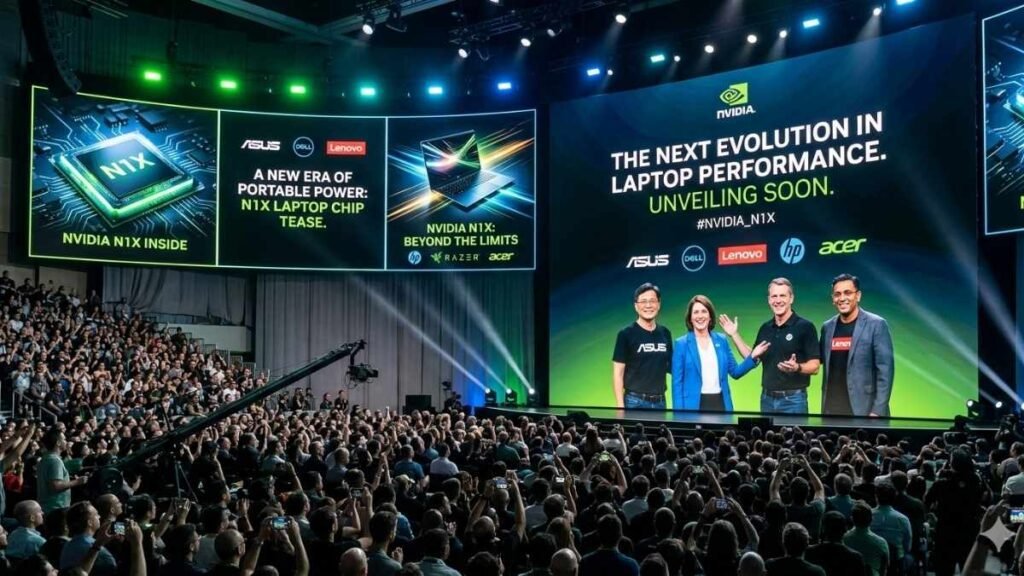
The silicon landscape is shifting rapidly as the highly anticipated Nvidia N1X laptop processor emerges as the next major battleground for mobile computing dominance. Historically, the consumer PC market has been dominated by x86 giants Intel and AMD, but the emergence of Arm architecture has completely disrupted this duopoly. With Nvidia supplying the graphics and AI prowess, Arm providing the architecture, and Microsoft optimizing the operating system, the Nvidia N1X laptop represents a unified front against traditional x86 giants. This coalition of industry leaders is teasing a hardware revolution that could redefine premium laptops forever.
The Strategic Importance of the Nvidia N1X Laptop
The upcoming release is more than just a routine silicon update; it is a direct challenge to Apple’s highly successful M-series chips. By leveraging Arm’s power-efficient instruction set, the Nvidia N1X laptop chip promises to deliver unprecedented battery life without compromising on raw processing horsepower. Nvidia’s expertise in graphics processing unit (GPU) architecture, combined with Arm’s energy-efficient designs, addresses the single biggest pain point of modern Windows laptops: performance-per-watt.
This collaboration is not just about raw performance; it is a calculated effort to establish the Nvidia N1X laptop ecosystem as the gold standard for premium mobile computing. According to data from Bloomberg, Nvidia’s market capitalization has soared past $3 trillion due to its AI dominance, and this project represents their grand entry into mainstream consumer CPUs. By integrating their custom CPU design with industry-leading Blackwell-generation or post-Blackwell graphics, Nvidia aims to deliver a platform that can handle local generative AI, AAA gaming, and professional workloads on a single charge.
The Windows on Arm Renaissance and Microsoft’s Role
Microsoft’s aggressive backing of this initiative is a crucial piece of the puzzle. Historically, Windows on Arm has suffered from compatibility issues, but Microsoft’s deep involvement suggests that the Nvidia N1X laptop will launch with highly optimized emulation layers and native application support. Microsoft’s recent push for AI-centric PCs is evident in their software updates, such as the Copilot Sidebar Returns: Windows 11’s AI Evolution, which demonstrates their long-term commitment to integrating artificial intelligence deep within the OS shell.
This evolution in OS capabilities directly complements the hardware capabilities of the Nvidia N1X laptop, creating a seamless environment for both productivity and high-end gaming. Microsoft is optimizing Windows 11 to ensure that the N1X’s dedicated Neural Processing Unit (NPU) can execute complex LLMs (Large Language Models) locally, offering users private, low-latency AI responses.
Key Architectural Features of the N1X Chipset
While official specs remain closely guarded, industry leaks reported by TechCrunch suggest that the processor will feature a custom Arm-based CPU core design paired with Nvidia’s latest mobile graphics architecture. Key expectations include:
- Unified Memory Architecture: Similar to Apple’s approach, allowing high-bandwidth memory to be shared dynamically between CPU, GPU, and NPU.
- Next-Gen NPU: Expected to deliver over 50 TOPS (Trillions of Operations Per Second), easily clearing Microsoft’s Copilot+ PC requirement of 40 TOPS.
- Blackwell-Infused Graphics: Offering desktop-class ray tracing and DLSS frame generation within a constrained power envelope.
- Advanced Thermal Efficiency: Engineered to run cool even in sub-15mm ultra-thin laptop chassis.
Challenging Apple and the x86 Establishment
For years, Apple has held a virtual monopoly on premium, high-efficiency laptops. The tech giant’s integrated approach allows it to control both software and hardware, a strategy detailed in Apple’s Gen AI Bet: WWDC Unveils New Strategy. However, the Nvidia-Microsoft-Arm alliance offers a decentralized alternative that matches Apple’s efficiency while maintaining the vast gaming and enterprise compatibility of the Windows ecosystem.
For gamers and creative professionals, the Nvidia N1X laptop architecture represents a dream scenario: massive GPU power paired with ultra-efficient CPU cores. Traditionally, high-end gaming laptops required bulky power bricks and suffered from terrible battery life. The N1X aims to shatter this paradigm by offering thin-and-light form factors capable of running modern AAA titles on battery power for hours.
Market Implications and Release Timeline
Industry analysts predict that the launch of the first Nvidia N1X laptop models could trigger a massive upgrade cycle in late 2025. Hardware manufacturers like ASUS, Dell, HP, and Lenovo are reportedly already designing chassis tailored specifically for this chipset. Because of Nvidia’s strong relationships with these OEMs, the roll-out is expected to be much faster and more comprehensive than previous Windows on Arm launches.
As the market prepares for this release, competitors are closely watching how the Nvidia N1X laptop handles thermal dynamics in thin-and-light chassis. If Nvidia successfully manages the heat generation of its powerful onboard GPU while keeping power draw low, Intel and AMD will face their most significant existential threat in decades.
Ultimately, the success of the Nvidia N1X laptop will depend on how successfully the platform bridges the gap between power efficiency and compatibility. With Microsoft, Arm, and Nvidia pulling in the same direction, the odds are heavily stacked in their favor, promising a dramatic shakeup in the global PC market.
Frequently Asked Questions
What is the Nvidia N1X laptop processor?
The Nvidia N1X is an upcoming premium laptop processor built on the Arm architecture, designed in collaboration with Microsoft and Arm. It aims to deliver elite-level CPU and GPU performance, high-speed onboard AI processing, and exceptional battery life to challenge Apple Silicon and traditional x86 chips from Intel and AMD.
When will Nvidia N1X laptop models be available?
While official release dates have not been finalized, industry teasers and supply chain reports suggest that the first Nvidia N1X laptops will make their debut in late 2025, with major OEMs like ASUS, HP, and Lenovo expected to showcase compatible models.
Will these processors support PC gaming?
Yes. Gaming is one of the primary pillars of the Nvidia N1X platform. Thanks to Nvidia’s advanced graphics architecture and dedicated tensor cores, the processor is expected to support features like DLSS and real-time ray tracing, offering high-fidelity gaming on highly portable laptops.