


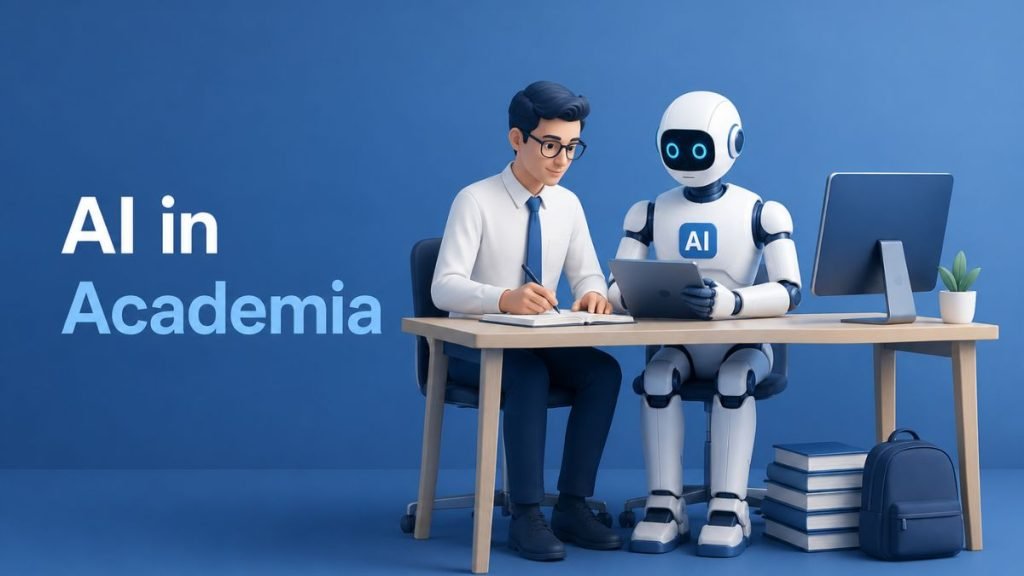
The growing integration of artificial intelligence into daily operations is sparking both innovation and apprehension across industries. A prime example of this tension is unfolding within the California State University (Cal State) system, where faculty members are vocally pushing back against the potential for AI tools to replace human educators. This debate surrounding AI in Academia isn’t merely about job security; it’s a critical examination of the very nature of education, human expertise, and the responsible deployment of powerful new technologies. This article delves into the technological underpinnings of this debate, exploring AI’s real-world applications, its disruptive potential, crucial ethical considerations, and practical implications for businesses and individuals grappling with the evolving landscape of work and learning.
The faculty’s concerns highlight a broader societal dialogue: How do we leverage AI’s immense capabilities without eroding the fundamental value of human input and expertise? Their stance forces us to consider not just what AI can do, but what it should do, particularly in sectors that rely heavily on nuanced human interaction and critical thinking, like education.
The AI Behind the Automation Push
At the heart of the faculty’s concerns are advancements in artificial intelligence, particularly large language models (LLMs) and various machine learning applications. These technologies have evolved rapidly, moving from theoretical concepts to practical tools capable of generating text, analyzing data, and even automating complex tasks.
Understanding Generative AI’s Capabilities
Generative AI, exemplified by systems like ChatGPT, can produce human-like text, summarize documents, create lesson plans, and even generate code. These capabilities are built upon deep learning algorithms trained on vast datasets, allowing them to identify patterns and generate coherent, contextually relevant outputs. For educational institutions, this means tools that can potentially assist with administrative tasks, create personalized learning materials, or even provide automated feedback on student assignments, leading some to question the necessity of certain human roles.
Machine Learning’s Role in Education
Beyond content generation, machine learning algorithms are pivotal in enabling adaptive learning systems. These systems analyze student performance data to tailor educational content, identify learning gaps, and offer targeted interventions. While offering unprecedented personalization, the increasing sophistication of these algorithms also raises questions about the scope of human involvement in curriculum design, student assessment, and individualized mentorship. The debate surrounding AI assistants in creative fields, for example, mirrors this tension over automation’s reach.
Cal State’s Stance: A Microcosm of Macro Concerns
The faculty’s push at Cal State isn’t an isolated incident; it represents a growing resistance to unchecked AI integration across professional sectors. Their concerns extend beyond immediate job displacement to the long-term impact on educational quality and the student experience.
Faculty members argue that complex tasks like nuanced grading, personalized mentorship, and fostering critical thinking require human judgment, empathy, and adaptability that AI currently lacks. The fear is that relying too heavily on AI tools could lead to a commoditization of education, diminishing the rich, interactive learning environment that experienced educators provide. This sentiment resonates with broader discussions about AI’s impact on white-collar jobs, where the unique cognitive and emotional contributions of humans are highly valued.
Real-World Applications & Industry Disruption Beyond Academia
The challenges faced by Cal State faculty are symptomatic of a wider phenomenon of industry disruption driven by AI. From creative arts to cybersecurity, AI is redefining roles and workflows.
AI in Content Creation & Marketing
In creative industries, generative AI can produce initial drafts of marketing copy, design layouts, and even generate entire video scripts. While these tools boost efficiency, they also prompt discussions about the future of traditional roles for writers, graphic designers, and marketers. The emphasis shifts from creation to curation, editing, and strategic oversight.
AI in Software Development & IT
AI’s influence in the tech sector is profound. Tools are automating code generation, debugging, and system maintenance. This shift demands that IT professionals evolve their skills, moving towards managing AI systems, data science, and complex problem-solving. This transformative effect is a key focus for experts observing how generative AI will change jobs, emphasizing adaptation over outright replacement.
AI in Cybersecurity and Data Analysis
Even in highly specialized fields like cybersecurity, AI is changing the game. AI-powered systems can detect anomalies, identify threats, and automate responses at speeds impossible for human analysts. While this enhances security, it also means that human roles are shifting from manual threat hunting to managing sophisticated AI tools and responding to complex, novel threats that still require human ingenuity. The ability of AI to hone cyberattacks, for instance, necessitates a parallel evolution in human defense strategies.
Ethical Quandaries and Societal Implications
The debate over AI in academia and other sectors brings forth critical ethical considerations. The question isn’t whether AI *can* replace certain tasks, but what the ethical implications are of allowing it to fully replace human roles.
Job Displacement vs. Job Evolution: A major concern is widespread job displacement. However, many argue that AI is more likely to transform jobs by automating mundane tasks, allowing humans to focus on higher-level, creative, and strategic work. This requires significant investment in retraining and upskilling the workforce.
Bias in AI: AI systems are only as unbiased as the data they are trained on. If AI tools are used to grade or assess students, inherent biases in their training data could perpetuate and amplify inequalities. Ensuring fairness and transparency in AI algorithms is paramount.
Data Privacy and Intellectual Property: The use of AI in education raises serious questions about student data privacy and who owns the intellectual property created by or with AI assistance. Clear policies and robust safeguards are essential to maintain trust and protect individual rights.
Navigating the Future: Practical Implications for Businesses and Individuals
The Cal State faculty’s push serves as a potent reminder for all stakeholders to approach AI integration with thoughtful strategy and foresight. The future is not about preventing AI, but about intelligently integrating it.
For Businesses: Organizations must develop clear AI adoption strategies that prioritize human-AI collaboration. This includes investing in employee training, focusing on tasks where human expertise is indispensable, and establishing ethical guidelines for AI deployment. Businesses that strategically leverage AI to augment human capabilities, rather than simply replace them, will likely foster greater innovation and employee satisfaction.
For Individuals: The imperative for lifelong learning has never been stronger. Individuals must cultivate skills that are uniquely human: critical thinking, creativity, emotional intelligence, complex problem-solving, and adaptability. Understanding how to work alongside AI, manage AI tools, and interpret AI-generated insights will be crucial for career longevity and success. The ability to continuously learn and adapt to new technologies will define individual resilience in the evolving job market.
Conclusion
The Cal State faculty’s stand against the uncritical adoption of AI tools is a critical juncture in the broader societal conversation about technology’s role in our lives. While AI offers unparalleled potential for efficiency and innovation, particularly in educational and professional settings, its deployment must be guided by careful consideration of human value, ethical implications, and the quality of outcomes. The future of work and education lies not in a binary choice between human or AI, but in a synergistic collaboration that enhances human capabilities, preserves essential human connections, and ensures a responsible path forward for artificial intelligence in academia and beyond.
Frequently Asked Questions
Why are Cal State faculty concerned about AI in Academia?
Cal State faculty are concerned that AI tools could replace human educators, diminishing the quality of education, affecting job security, and eroding the nuanced human interaction essential for effective learning and mentorship.
What specific AI technologies are causing this concern?
The main concerns revolve around generative AI models, like large language models (LLMs), which can create content and automate tasks, and machine learning applications that personalize learning and analyze data, potentially reducing the need for human input in various educational processes.
How can businesses and individuals prepare for AI’s impact on jobs?
Businesses should invest in employee training and ethical AI deployment strategies, focusing on human-AI collaboration. Individuals should cultivate uniquely human skills such as critical thinking, creativity, and emotional intelligence, and commit to lifelong learning to adapt to new technological landscapes.
Will AI completely replace human jobs in education?
While AI is likely to automate certain tasks, experts generally believe it will transform rather than completely replace human jobs in education. The focus will shift towards human educators managing AI tools, providing complex mentorship, and fostering critical thinking that AI cannot replicate.